Hungary Launches Gambling Sector Audit
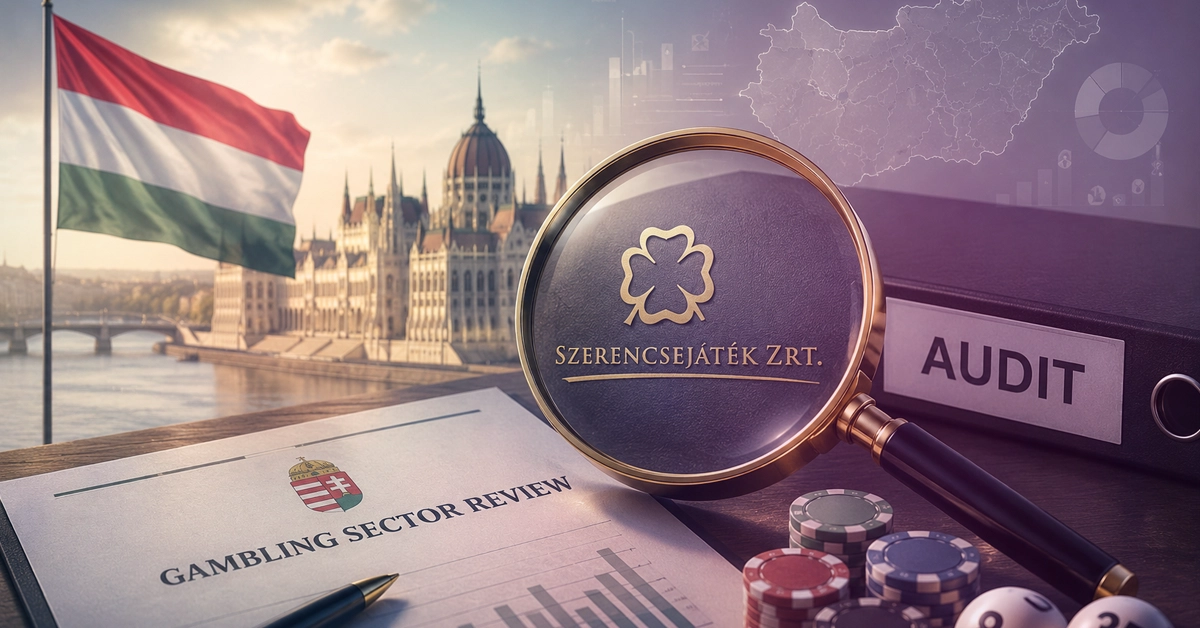
Hungary has launched its first major review of the country’s gambling sector in over a decade, placing renewed scrutiny on one of its most influential state-owned enterprises.
Shortly after forming his cabinet, Prime Minister Péter Magyar initiated a broad transitional audit covering public finances, regulatory institutions and state-owned companies shaped during the long tenure of former Prime Minister Viktor Orbán and the Fidesz government.
At the centre of this review is Szerencsejáték Zrt., Hungary’s state-controlled lottery and sports betting operator. The company has long held a dominant position in the domestic market, serving as a major source of state revenue while operating within a tightly regulated licensing structure.
Rather than moving toward immediate structural change, the current government is focusing on how revenues generated by the operator were distributed and whether they were used in line with public finance principles. Finance Minister András Kármán has raised concerns over the flow of gambling-derived funds, suggesting that some allocations were previously directed toward political communications and sponsorship arrangements instead of being fully channelled into the state budget.
The administration has also indicated that it may reassess special tax measures introduced in earlier years, alongside a broader tightening of oversight across state-linked enterprises.
Gambling revenue under political scrutiny
The review extends beyond financial performance and into the wider role gambling revenues have played in Hungary’s institutional framework. Under previous administrations, lottery and betting income was frequently linked to cultural funding, sports sponsorships and media support mechanisms, creating a complex financial ecosystem around the sector.
Incoming Culture and Social Relations Minister Zoltán Tarr has signalled that these indirect funding channels will also be examined as part of efforts to improve transparency and rebuild public trust in state institutions.
Hungary’s gambling sector is regulated under the Gambling Operations Act of 1991 and overseen by the Supervisory Authority for Regulatory Affairs, led by Dr Marcell Bíró. The authority manages licensing, compliance and enforcement across land-based and online operations, including oversight of unlicensed activity.
Although Hungary opened its online sports betting market to operators from the European Economic Area in 2023, the framework remains largely concession-based, with incumbent state-linked structures continuing to play a dominant role. Analysts expect the new administration to revisit parts of this system, particularly arrangements introduced in the final years of the previous government.
Strong financial footprint limits disruption
Despite political uncertainty, the financial weight of Szerencsejáték Zrt. remains significant. The operator generated approximately €3.25 billion in revenue in 2024 and recorded more than 1.1 million registered players. Total tax and regulatory contributions were reported at around €447 million.
Hungary’s broader gambling market is estimated at over $1.7 billion, with online betting identified as one of the fastest-growing segments in the region.
This scale means any abrupt overhaul is considered unlikely, as the sector remains a key contributor to state revenues at a time when fiscal stability is a priority. However, the direction of policy appears to be shifting toward greater competition and alignment with European regulatory standards.
Market direction under review
Officials have not yet confirmed whether reforms will involve partial liberalisation, restructuring of concessions or changes to ownership models. However, the current review signals a clear departure from the historically centralised approach to gambling regulation in Hungary.
After years in which gambling policy was closely tied to state strategy and revenue planning, the sector is now being treated as a standalone policy area with potential for significant reform in the years ahead.

iGamist Editorial Team
An experienced writer covering the latest trends in online gaming and iGaming industry.
Stay Updated
Get the latest iGaming news and guides delivered to your inbox