In this article: 39 sections

Search visibility can play an important role in how iGaming businesses attract and reach their audiences. For online casinos, sportsbooks, affiliates, game providers and other industry websites, appearing for relevant searches can bring users to the right page at the right stage of their journey.
But iGaming SEO is more than adding keywords to casino or betting pages.
The industry operates across competitive search markets, different languages and GEOs, changing regulations and a wide range of user search intents. A successful SEO strategy therefore needs to connect technical website performance with useful content, clear site structure, relevant search terms and a strong understanding of the audience.
This guide explains how iGaming SEO works, what areas deserve attention and how operators, affiliates and other iGaming businesses can build a search strategy that supports sustainable organic visibility.
What Is iGaming SEO?
iGaming SEO is the process of optimizing websites and content related to online gambling so that they can be discovered through relevant search queries.
The basic principles are similar to SEO in other industries: search engines need to be able to access and understand a website, while users need to find useful and relevant information.
What makes iGaming different is the combination of highly competitive commercial searches, regulated markets, country-specific requirements and multiple types of audiences.
An iGaming SEO strategy may be used by:
Online casino operators
Sports betting operators
Casino and sportsbook affiliates
Game providers
iGaming platforms
Industry publishers and media websites
The objectives can also differ. An operator may focus on attracting potential players to casino or sportsbook pages, while an affiliate may focus on comparison pages, reviews, bonuses or informational content. A provider may instead use SEO to reach operators and other B2B audiences.
For that reason, there is no single SEO strategy that works for every iGaming website.
Why Is SEO Important for iGaming?
Search can connect users with websites when they are actively looking for information, products or services.
For an iGaming business, that can include searches related to:
Online casinos
Sports betting
Casino games
Slot games
Betting markets
Bonuses and promotions
Payment methods
Gambling guides
Casino or sportsbook reviews
Specific brands or products
The value of SEO is not simply the amount of traffic a website receives. The relevance of that traffic matters as well.
A page ranking for a broad term may attract visitors who have little interest in the business behind it. A more focused page can attract a smaller audience but match a much clearer search intent.
This makes search intent, relevance and the quality of the landing page important parts of an iGaming SEO strategy.
How Does iGaming SEO Work?
A practical iGaming SEO strategy brings several areas together rather than treating SEO as a single task.
At a basic level, the process involves:
Understanding what the target audience searches for
Identifying the intent behind those searches
Creating the right pages for those searches
Making those pages useful and easy to understand
Building a website structure that helps users and search engines navigate the site
Ensuring important pages can be crawled and indexed
Building authority through relevant references and links
Monitoring organic performance and improving the strategy over time
Search engines use automated systems to discover, crawl and index web pages and determine which pages are relevant to particular searches. SEO helps make a website's content and structure easier to understand but there is no technique that guarantees a particular ranking.
The goal should therefore be to build a website that deserves to appear for the searches it targets rather than simply trying to manipulate search results. Google's current Search Essentials and spam policies specifically address practices intended to manipulate rankings, including scaled content created primarily for search engines.
Understanding Search Intent in iGaming
Before creating an SEO page, it is important to understand why someone is searching.
Two keywords can look similar but represent completely different needs.
Informational Intent
The user wants to learn something.
Examples include:
How does blackjack work?
What is slot RTP?
How do betting odds work?
What is a live casino?
These searches are generally suited to guides, educational articles and explanatory content.
Commercial Intent
The user is researching products, brands or options before making a decision.
Examples include:
Best online casinos
Best sportsbook for football
Casino comparison
Best casino bonus
These searches may require comparison pages, reviews or detailed product-focused content.
Transactional Intent
The user is closer to taking an action.
Examples can include searches related to a specific casino, sportsbook, game, payment method or bonus.
The appropriate page depends on the query and the website's business model.
Navigational Intent
The user already has a particular brand or website in mind.
Examples include searches for an operator, affiliate, game provider or specific casino brand.
Understanding these differences helps prevent a common SEO problem: creating a page simply because a keyword has search volume without considering whether the page actually satisfies the user's reason for searching.
Building an iGaming SEO Strategy
A useful SEO strategy should begin with the business and its audience rather than with a list of keywords.
Start by defining:
The target audience
The products or services being promoted
The countries and languages being targeted
The commercial objectives
The types of searches that can realistically lead to those objectives
From there, keywords can be grouped according to topic and intent and mapped to the pages that should target them.
This helps avoid creating several pages that compete for essentially the same search intent.
A sportsbook targeting football bettors, for example, may need a different content structure from a casino affiliate targeting game reviews. Likewise, an iGaming B2B provider targeting operators will have very different search requirements from a consumer-facing casino website.
The strategy should reflect those differences.
iGaming Keyword Research
Keyword research helps identify the terms and questions people use when searching for relevant information.
For iGaming websites, keyword research can cover several layers.
Core Industry Terms
These are broad searches related to the main product or service.
Examples:
Online casino
Sports betting
Casino games
Live casino
Online sportsbook
These terms can be highly competitive, so they should not be the only focus of a keyword strategy.
Long-Tail Searches
Long-tail keywords are more specific searches that often reveal a clearer intent.
Examples include:
How does live roulette work?
Best football betting sites in [country]
How to calculate betting odds
Best payment methods for online casinos
These searches can help websites build content around specific questions and use cases.
GEO-Specific Keywords
Search behavior varies between markets.
A website targeting several countries should research the terminology, products, regulations and search behavior relevant to each market rather than simply translating the same keyword list.
Brand Keywords
Brand searches relate to specific operators, providers, games or other companies.
These can be particularly important for businesses that already have brand awareness, but branded and non-branded searches should generally be analyzed separately when measuring SEO performance.
Keyword Mapping
Once keywords have been researched, they should be assigned to the pages that best satisfy their intent.
For example:
Search intent | Potential page |
Broad casino search | Casino category or landing page |
Specific casino review | Casino review |
Casino game information | Game page or guide |
Sports betting information | Betting guide |
Specific sportsbook | Sportsbook review or brand page |
Informational query | Educational article |
The purpose is not to place every variation of a keyword on every page. It is to create a clear relationship between search intent, topic and page.
Creating the Right iGaming Website Structure
Website architecture has an important role in SEO because it affects how users navigate the site and how search engines discover and understand pages.
An iGaming website may contain hundreds or thousands of URLs, particularly when it includes games, operators, markets, sports, reviews or other frequently changing information.
A logical structure can help organize that content.
For example, a casino affiliate might have:
Casino
• Casino Reviews
• Casino Bonuses
• Casino Guides
• Casino Games
• Payment Methods
• Country-specific Casino Pages
A sportsbook could use a different structure:
Sports Betting
• Sports
• Betting Markets
• Betting Guides
• Sportsbook Reviews
• Country-specific Betting Pages
The exact architecture should depend on the website rather than following a fixed template.
The important point is to avoid creating large numbers of pages simply to target slightly different keyword variations. Google identifies doorway abuse and substantially similar pages created primarily to capture specific searches as spam practices.
On-Page SEO for iGaming Websites
On-page SEO covers the elements of a page that help communicate its topic and purpose.
Important areas include:
Page Titles
Titles should accurately describe the page and give users a clear reason to click.
Avoid forcing several keyword variations into one title.
Headings
Use headings to organize the content logically and make longer pages easier to navigate.
URLs
Keep URLs understandable and related to the page topic. Avoid unnecessary parameters, repetitive keywords or complicated URL structures.
Internal Links
Internal links connect related pages across the website.
For iGaming websites, this can help users move between guides, reviews, games, market pages and related topics while also helping search engines discover relevant content.
Images
Images should support the content rather than simply filling space. Descriptive file names and appropriate alternative text can also help make images more accessible and understandable.
Meta Descriptions
A useful meta description can summarize the page and encourage relevant users to visit it. It is not simply a place to repeat keywords.
Technical SEO for iGaming Websites
Technical SEO provides the foundation that allows search engines to access and process a website.
Important areas include:
Crawlability
Indexing
Site architecture
XML sitemaps
Canonical URLs
Mobile usability
Page performance
Redirects
Broken links
JavaScript rendering
HTTPS
Structured data where appropriate
Canonicalization is particularly relevant to large iGaming websites because similar or duplicate URLs can appear through filters, parameters, regional versions and other site functions. Google describes the canonical URL as the representative version it selects from a set of duplicate or similar pages.
Technical SEO should not be treated as a one-time project. New games, markets, landing pages and website features can introduce new technical issues over time.
Content Strategy for iGaming SEO
Content is one of the areas where iGaming websites can easily become repetitive.
Publishing dozens of pages around slightly different versions of the same keyword does not automatically create a stronger SEO presence.
A better approach is to build useful topic coverage.
For example, a website covering online slots might create content around:
How slot RTP works
Slot volatility explained
How slot mechanics work
Different types of slot games
Slot game reviews
Responsible slot play
Each page should have a clear purpose and add something useful for the reader.
This is particularly important for affiliate websites. Google's spam policies distinguish between useful affiliate content and thin affiliation, where affiliate pages provide little original value beyond copied or standardized product information.
For iGaming content, originality can come from meaningful analysis, comparisons, firsthand information where available, useful data, clear explanations or a genuinely better way of organizing information.
International iGaming SEO
International SEO is especially relevant to iGaming because operators and affiliates may target multiple countries and languages.
However, international expansion should involve more than translating the same page.
A localized SEO strategy may need to consider:
Language
Local terminology
Search behavior
Payment preferences
Market-specific products
Local regulations
Country-specific content
Regional URLs
For multilingual or multi-regional websites, hreflang annotations can help Google understand relationships between localized versions of pages. Google also recommends considering canonicalization when managing regional variants.
Localization is therefore closely connected to SEO, but the two should not be treated as identical. A translated page is not necessarily a properly localized page.
SEO for iGaming Affiliates vs Operators
Although both affiliates and operators compete in search, their SEO objectives can be very different.
iGaming Affiliate SEO
Affiliates often depend heavily on content that helps users compare or evaluate options.
Potential page types include:
Casino reviews
Sportsbook reviews
Comparison pages
Bonus pages
Game guides
Payment guides
Educational content
The challenge is to provide genuine value rather than simply reproducing information supplied by operators.
iGaming Operator SEO
Operators may focus more heavily on their own products, brands and services.
Potential SEO areas include:
Casino and sportsbook landing pages
Game categories
Individual game pages
Sports and betting markets
Brand-related searches
Payment information
Responsible gambling information
Market-specific pages
The two models can overlap, but the content architecture and conversion paths should reflect the underlying business model.
Building Authority for an iGaming Website
Links from relevant external websites can help search engines discover pages and understand relationships between websites.
For iGaming businesses, potential sources include:
Industry publications
Relevant media websites
Business publications
Partnerships
Original research
Digital PR
Expert contributions
The focus should be on relevance and genuine value rather than simply accumulating large numbers of backlinks.
Buying or creating large quantities of manipulative links can create SEO risks. The same principle applies to content: publishing large volumes of low-value pages simply to capture search traffic is not a sustainable SEO strategy. Google's current spam policies specifically address link abuse and scaled content practices.
Measuring iGaming SEO Performance
SEO performance should be measured against business objectives rather than rankings alone.
Useful metrics can include:
Organic clicks
Search impressions
Keyword visibility
Non-brand organic traffic
Organic conversions
Revenue from organic traffic
Engagement with key landing pages
Performance by country
Performance by page type
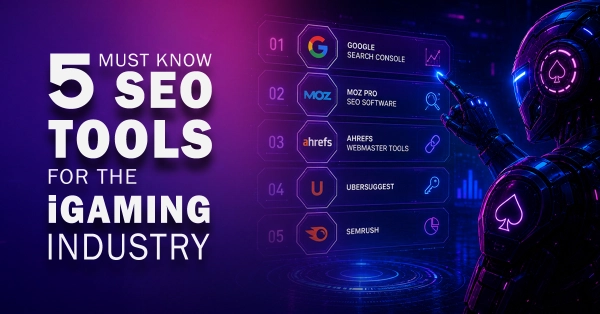
Google Search Console can help website owners monitor search performance and understand how Google crawls and indexes their websites.
Analytics data can then help connect organic visits with actions on the website.
For an affiliate, that might mean tracking referred registrations or other agreed conversion events. For an operator, it could involve measuring registrations, deposits or other business-defined actions.
The most useful measurement framework therefore depends on the website's business model.
Common iGaming SEO Mistakes
Targeting Keywords Without Understanding Intent
A keyword may look attractive based on search volume but still be a poor fit for the page or business.
Creating Too Many Similar Pages
Generating separate pages for every minor keyword variation can create thin or repetitive content and make the site harder to manage.
Copying Operator or Provider Content
Affiliate websites need to add meaningful value rather than simply republishing descriptions supplied by brands.
Ignoring GEO Differences
A strategy that works in one market may not translate directly to another because search behavior, language, products and regulations can differ.
Focusing Only on Rankings
A ranking is not the final business objective. Traffic quality, conversions and revenue can matter much more.
Treating SEO as a One-Time Project
Search behavior, competitors, products and websites change. SEO requires ongoing monitoring and refinement.
Final Takeaway
iGaming SEO is not a single technique or checklist. It is a combination of search intent, keyword research, content, website structure, technical SEO, authority, localization and performance measurement.
The right strategy depends on the type of iGaming business, its audience, target markets and commercial goals.
Rather than creating content simply because a keyword has search volume, build pages around genuine user needs. Keep the website technically accessible, organize related topics clearly and make sure every important page has a defined purpose.
For iGaming operators, affiliates and other industry businesses, SEO works best when search visibility is treated as part of the broader digital strategy rather than as an isolated marketing task.
Stay Updated
Get the latest iGaming news and guides delivered to your inbox