Brazil Betting Ban Fails to Curb Illegal Social Media Ads
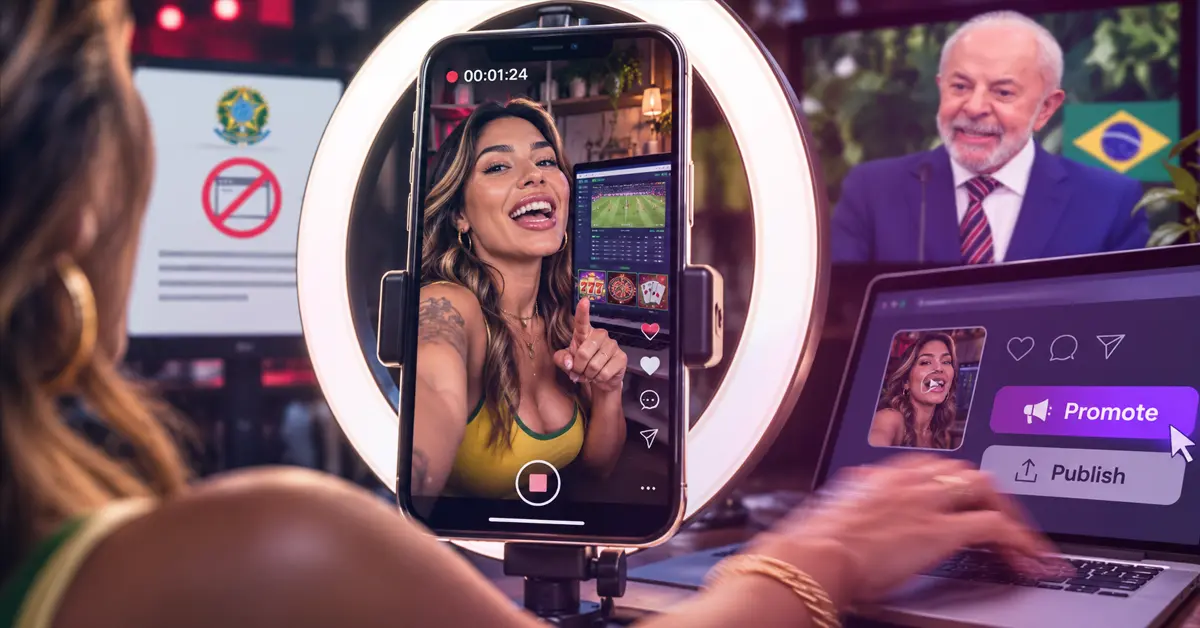
Brazil's restrictions on online betting have not eliminated gambling activity but appear to have pushed some operators towards unregulated channels, where social media remains an important tool for reaching customers. Two investigations published by Estadão have examined how illegal betting platforms and influencers continue promoting gambling services despite government restrictions and enforcement efforts by digital platforms.
The first investigation, conducted by Estadão Verifica journalist Bernardo Costa, identified 30 websites offering unauthorised gambling services through paid advertisements on Instagram and Facebook. A separate investigation by Vinícius Valfré examined how influencers whose accounts have been suspended continue reaching audiences through alternative profiles, directing followers to WhatsApp and Telegram groups promoting illegal betting.
Paid Social Media Advertisements Continue Promoting Illegal Betting
The Estadão Verifica investigation identified ten sponsored advertisements on Instagram and Facebook linking users to sports betting platforms and online slot games, including Jogo do Tigrinho, a popular title in Brazil.
Despite the restrictions, the advertisements used messages suggesting that betting services had returned or never disappeared. Their promotional wording included phrases such as "we never stopped", "back in the game", "betting is back" and "the betting site is live".
Some advertisements redirected users to WhatsApp and Telegram groups where links to betting platforms and gambling tips were shared. One website advertised monthly winnings exceeding R$3 million, while another allegedly used the identity of a previously recognised legal betting brand.
The investigation also uncovered suspicious activity in the comments sections of advertisements and posts. Some accounts had no profile pictures and published content in Chinese, raising concerns about the use of fake profiles to support illegal promotions.
Additionally, fraudulent news pages designed to resemble publications from Estadão and G1 directed users towards Google Play. The applications promoted through these links reportedly accumulated more than 670,000 downloads.
Suspended Influencers Rebuild Their Audiences
The second investigation examined how influencers have maintained their promotional reach after losing access to accounts associated with betting advertisements.
Several personalities reportedly established new profiles and attracted substantial audiences despite restrictions on their original accounts.
Anderson Neiff, whose restricted profile had 11.8 million followers, reportedly accumulated another 2.6 million followers through a separate account. Malévola, who had previously maintained another profile with one million followers, returned with a new account that also reached one million followers.
Meanwhile, Guilherme Souza, known as Guipolêmico, rebuilt his audience to 950,000 followers after losing an account that had four million followers.
Smaller content creators have also continued advertising betting services alongside their usual posts about humour, fashion and lifestyle.
The newspaper raised additional concerns about the platforms used by these influencers, pointing to insufficient transparency and registration safeguards that could allow children and teenagers to access gambling-related content.
Illegal Betting Activity Raises Questions About Enforcement
The findings add to existing figures from government agencies and industry organisations monitoring unauthorised gambling in Brazil.
The Ministry of Justice requested the removal of 348 Instagram profiles associated with illegal betting promotions. Together, these accounts had more than 150 million followers. However, Estadão reported that the profiles had not necessarily been deleted and were instead inaccessible to users located in Brazil.
The ministry also recorded approximately 60,600 reports concerning illegal betting promotions. Separately, the National Association of Games and Lotteries (ANJL) was monitoring around 60,400 websites suspected of offering unauthorised betting services.
Estimates from LCA Consultoria Econômica placed the illegal gambling market at between 38% and 44% of the market before the provisional measure took effect. This represented an estimated annual volume of R32.9billiontoR43.3 billion.
H2 Gambling Capital estimated that the restrictions could result in annual losses of R$25 billion for operators outside the legal market.
Meta and Google Respond to Allegations
The investigations also examined the responsibilities of major digital platforms in preventing illegal gambling advertisements and applications from reaching users.
Meta stated that its policies prohibit advertisements promoting illegal services and that such content is removed when identified. However, during Estadão's investigation, a report concerning prohibited betting websites received an automated response indicating that no platform rules had been breached.
Google said it revised its advertising policies on September 30 to prohibit promotions for fixed-odds betting. The company also stated that it was removing applications from Google Play.
Meanwhile, neither the Ministry of Justice nor the Ministry of Finance provided responses to the newspaper's questions about enforcement measures and repeat offenders.
Experts Question the Impact of Brazil's Betting Restrictions
The continued availability of illegal betting promotions has also raised concerns among researchers about the potential consequences for vulnerable consumers.
Victor Cruz, a psychologist at the Federal University of Minas Gerais (UFMG), warned that repeated exposure to gambling advertisements could trigger urges among people attempting to stop betting. Such promotions could also encourage individuals who have not previously gambled to start playing.
Isabela Almeida do Amaral, a researcher at the Federal University of Rio de Janeiro (UFRJ), argued that prohibition alone would not prevent betting platforms from reaching consumers.
The findings have added to the debate over the effectiveness of Brazil's betting restrictions, which are facing scrutiny in Congress and legal challenges before the Supreme Federal Court.
The central question remains whether the restrictions are achieving their intended consumer protection objectives or pushing more gambling activity towards an underground market where players have fewer safeguards.

iGamist Editorial Team
An experienced writer covering the latest trends in online gaming and iGaming industry.
Stay Updated
Get the latest iGaming news and guides delivered to your inbox