Chile Online Betting Bill Faces Opposition Over Tax and Rules
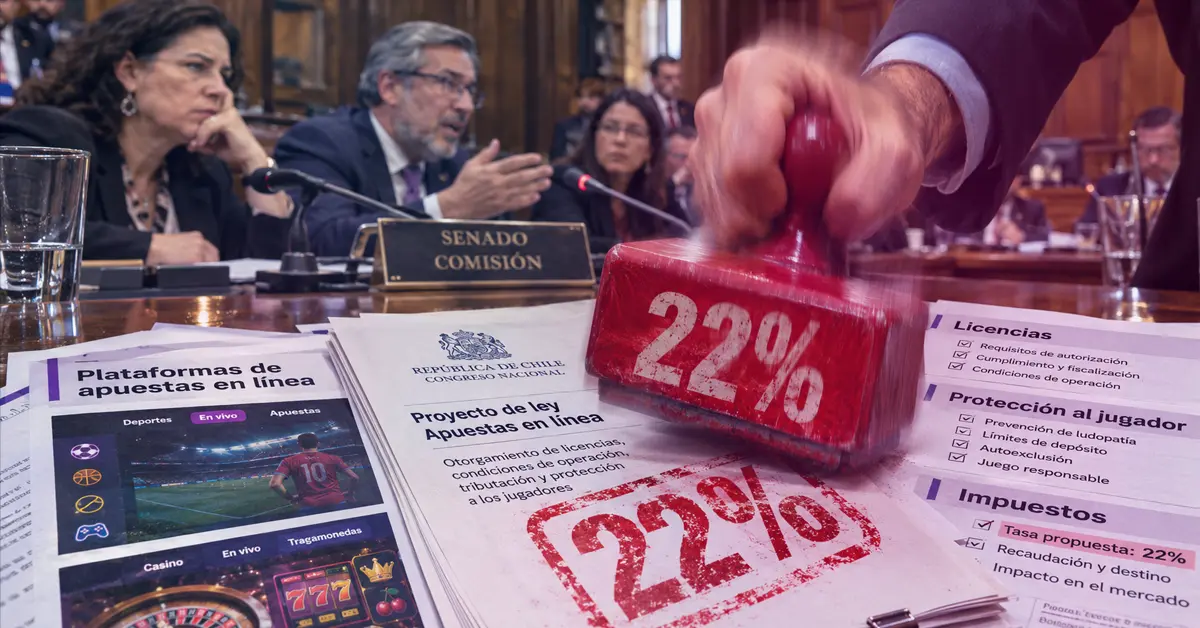
Chile’s efforts to establish a regulated online betting market are facing resistance from lawmakers, who argue that the government’s proposed licensing framework does not provide sufficient safeguards to control the industry.
The plan includes state-issued licences, measures to prevent minors from accessing online gambling services and the creation of a dedicated fund for people affected by problem gambling. However, disagreements over the proposed regulatory conditions and taxation have complicated its progress.
The government is considering a 22% tax on operators’ profits, an approach supported by Finance Minister Jorge Quiroz. Some members of the Senate Economic Committee are reportedly seeking a substantially higher rate. The committee is expected to discuss the proposal on Tuesday.
Senators Disagree Over Regulation or Prohibition
Senator Matías Walker supports establishing a regulatory framework rather than maintaining a prohibition-based approach. However, he has raised concerns that the proposed rules could give online gambling operators an advantage over traditional casinos.
Speaking to BioBioChile, Walker said it was preferable to “move forward with regulation rather than prohibition”. He also questioned plans that could allow land-based casinos to enter the online betting market, arguing that traditional operators should not automatically receive access to a sector in which they are not currently authorised to operate.
Senator Manuel José Ossandón also opposed extending online betting privileges to physical casino operators. He questioned whether the government should prioritise regulation or enforcement when both options are available.
“If we have tools to control and legalise them, but not to combat them, which of the two are we going to use?” he asked.
Opposition Calls for Tougher Licensing Requirements
Opposition senator Beatriz Sánchez believes the proposed legislation needs additional safeguards before it can secure support. Her recommendations include limiting the number of available licences, tightening market-entry requirements, increasing taxation and introducing advertising restrictions.
Sánchez said these conditions had been developed by a technical working group but were left out of the government's proposal.
She also argued that the Executive had declined to incorporate the recommendations and had instead opted for a prohibition approach to online betting. Without stronger requirements, she believes the industry cannot be regulated effectively.
The disagreement reflects wider concerns among lawmakers that the proposed framework does not offer adequate protection for a sector that is currently prohibited in Chile.
Casino Association Challenges Online Gambling Tax Rules
The Chilean Association of Casinos and Gaming has also taken legal action against the country's Internal Revenue Service (SII), submitting an economic protection appeal to the Santiago Court of Appeals.
The challenge concerns Exempt Resolution No. 69, which established a procedure for foreign companies without a domicile or residence in Chile that provide gambling and sports betting services to fulfil their tax obligations.
The association maintains that online gambling does not have a lawful licensing framework in Chile, including for operators that already hold licences for land-based casinos. It argues that the SII has “organised the taxation of an activity prohibited by law”.
The appeal further disputes the application of VAT provisions designed for digital entertainment services and challenges the legal basis for the tax calculation.
The organisation also referred to its 2023 decision to withdraw from the simplified tax regime, which it said was based on the position that these companies were operating illegally. It argues that the current situation does not justify changing that position while the operators remain prohibited from conducting business.
The association also cited an appeal submitted in July and an earlier ruling by the Comptroller General, which found that the disputed provisions remained in force.
Chile's legislative debate therefore continues to centre on the conditions for a potential online betting market, with lawmakers divided over licensing, taxation, consumer safeguards and whether regulation or prohibition should prevail.

iGamist Editorial Team
An experienced writer covering the latest trends in online gaming and iGaming industry.
Stay Updated
Get the latest iGaming news and guides delivered to your inbox