EU Proposes New Rules on Loot Boxes and Influencer Ads
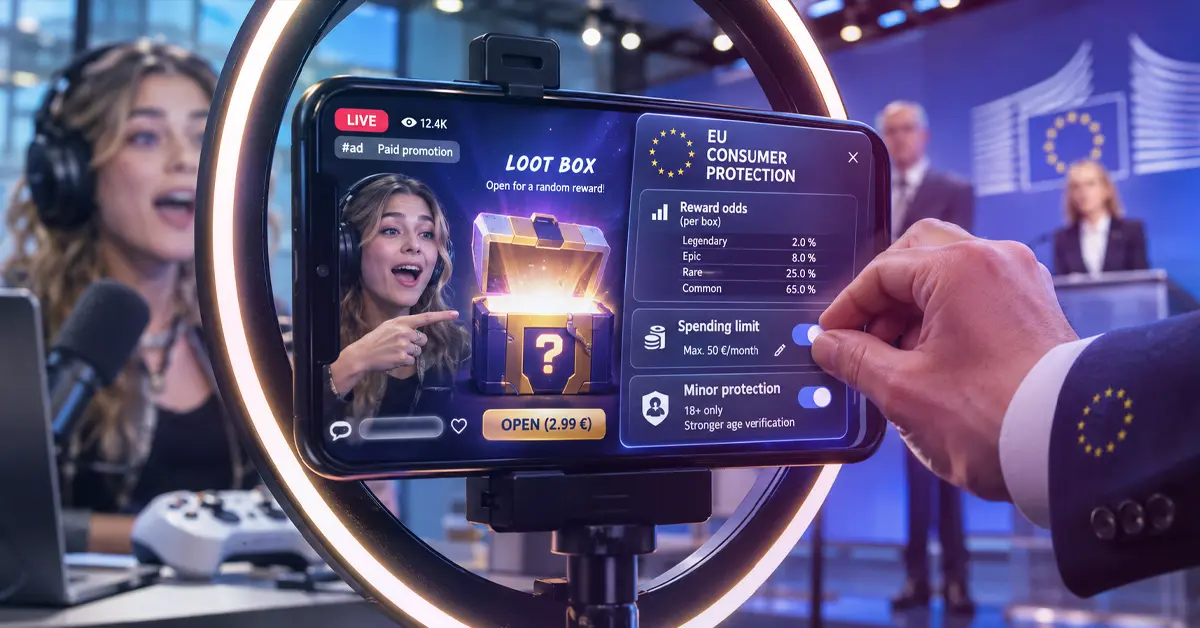
The European Commission has put forward new consumer protection measures targeting paid loot boxes, random in-game rewards and influencer marketing. The proposed Digital Fairness Act includes additional safeguards for minors and stricter requirements for disclosing commercial content.
EU Proposal Seeks Greater Control Over Paid In-Game Rewards
Article 15 of the draft legislation would require businesses offering paid variable reward systems to disclose the characteristics of available rewards and explain the chances of obtaining them. Consumers would also have to be given the option to disable these features.
The proposed requirements cover reward mechanisms purchased entirely or partly with money or virtual currency. Examples identified by the Commission include loot boxes, wheels of fortune and collectible card packs.
According to the regulator, these mechanics can encourage unnecessary spending and share certain characteristics with gambling.
However, the proposal does not seek to classify every loot box as gambling. Instead, it introduces additional protections where a product is designed for minors or there are reasonable grounds to believe that children are using it.
In such cases, paid variable reward systems would not be allowed to target minors. Paid virtual currencies would also be switched off by default for underage users, with access permitted only following parental consent.
Influencer Marketing Faces Tighter Disclosure Rules
The draft also addresses commercial content shared by influencers. Under Article 11, creators would be required to identify advertisements and commercial partnerships using consistent terminology and make use of available tools for disclosing promotional content.
The measures would also prevent influencers from directly encouraging minors to purchase products or promoting goods that are unsuitable for children.
Businesses would be responsible for ensuring compliance through contractual arrangements or other appropriate measures.
The proposal does not establish a blanket prohibition on influencer-led gambling advertising across the EU.
The European Commission presented the draft on November 11. It must now be reviewed by the European Parliament and the Council, which will need to agree on the text before the proposed legislation can become law.

iGamist Editorial Team
An experienced writer covering the latest trends in online gaming and iGaming industry.
Stay Updated
Get the latest iGaming news and guides delivered to your inbox