India Blocks 129 Betting Sites Over Forged Court Orders
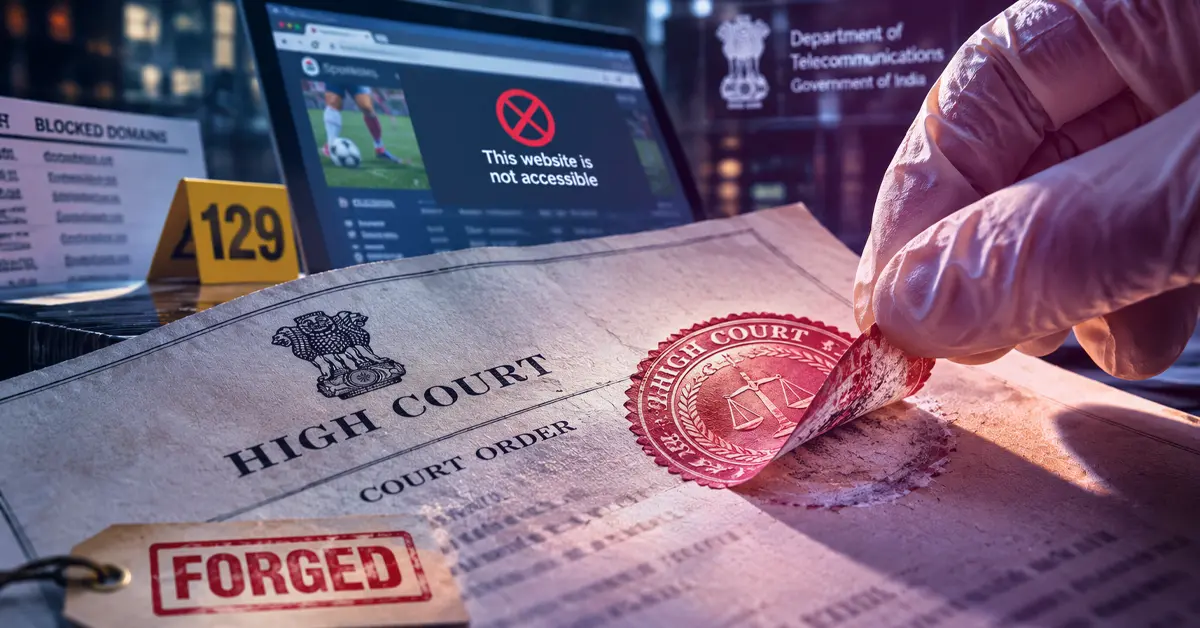
India’s Department of Telecommunications (DoT) directed internet providers to restrict access to 129 betting websites after receiving two fraudulent court orders. A Reuters investigation has revealed that the documents, which were presented as decisions from the Rajasthan and Allahabad High Courts, were not genuine, raising questions about the verification procedures behind website blocking requests.
The DoT issued the blocking instructions on 21 July and 2 September, relying on documents that allegedly originated from the two courts. However, neither order could be found in the courts’ official records, and the Rajasthan High Court registrar confirmed that its purported document was forged.
Following concerns raised by Reuters, the Allahabad High Court submitted a police complaint on 6 November. Authorities subsequently launched an investigation into suspected forgery and cheating. No arrests have been reported.
Ghanshyam Yadav, a senior state cybercrime official, confirmed the document was not authentic, saying:
“It is fake. It is not a genuine order from the High Court of Allahabad.”
The two documents led to the blocking of 129 websites offering online casino and betting services in India. The identities of those responsible for producing the forged orders remain unknown, as does whether artificial intelligence played any role in their creation.
Forged Documents Used to Secure Website Blocking Orders
The first document purported to be an order from the Rajasthan High Court. It was emailed to the Department of Telecommunications on 19 July and carried the signature of an individual identified as advocate-on-record Aryan Chaudhary. Although the email system initially returned an error, authorities issued instructions to internet service providers on 21 July to block the 34 gambling websites listed in the document.
A second fraudulent order claimed to come from the Allahabad High Court. It included the court’s logo, seal and a QR code intended to demonstrate its authenticity. However, scanning the code directed users to an unrelated website displaying details of a different case.
The document was submitted to authorities on 22 August by an individual identifying himself as advocate Kartikey Pandey, who also referenced the same case number in his correspondence.
Following further official communications, the Department of Telecommunications instructed internet providers on 2 September to block an additional 95 betting websites.
The incident has drawn attention to potential shortcomings in India's website takedown procedures. The system grants authorities substantial powers to restrict access to online platforms and content, making the verification of documents used to request blocking orders particularly important.

iGamist Editorial Team
An experienced writer covering the latest trends in online gaming and iGaming industry.
Stay Updated
Get the latest iGaming news and guides delivered to your inbox