Macau Casinos Pledge MOP$9bn to Diversification Fund
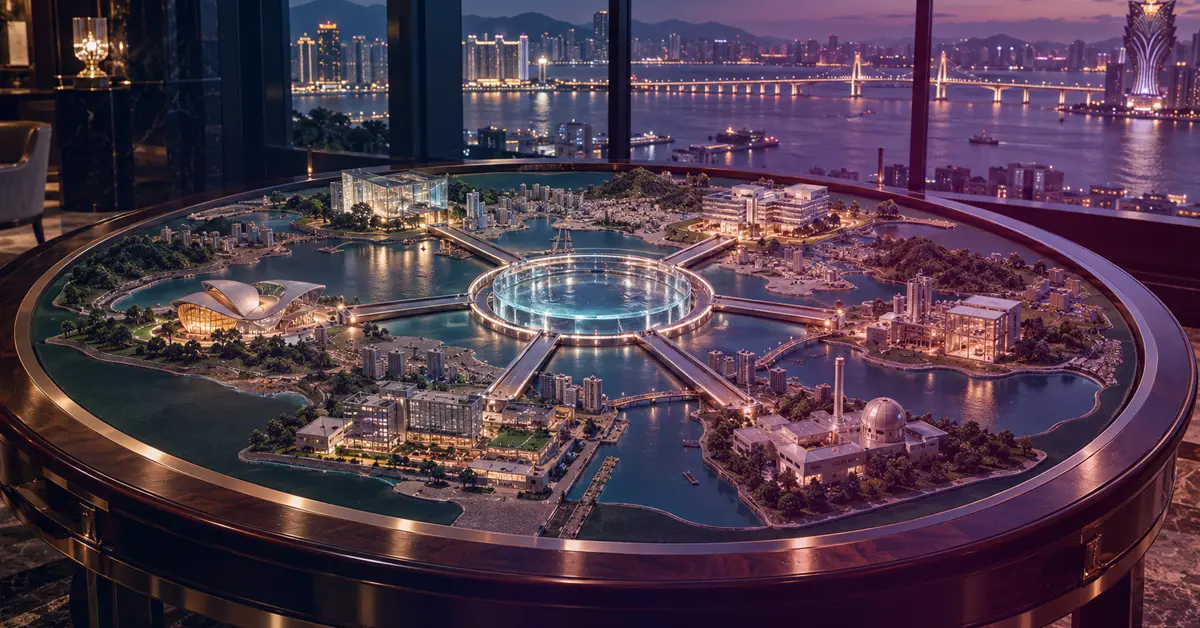
Macau’s six casino concessionaires have pledged a combined MOP$9 billion (US$1.1 billion) to a government-backed investment fund designed to promote economic development beyond gaming and tourism. The commitments will be recognised as part of the operators’ investment obligations under their existing 10-year concessions.
On Friday, representatives of the six companies signed agreements to join the Macao SAR Government Guidance Fund No 2, Limited Partnership Fund as limited partners. Chief Executive Sam Hou Fai and other senior government officials attended the ceremony, which formally launched the fund’s operations.
Fund Combines Operator Pledges and Government Reserves
The investment vehicle begins with MOP$20 billion (US$2.5 billion) in capital. Of this amount, MOP$9 billion comes from the casino operators, while the remaining MOP$11 billion (US$1.4 billion) is drawn from the government’s fiscal reserves.
The fund will target emerging sectors, industrial modernisation, technology start-ups and the commercialisation of scientific and technological research. It will also support projects connected to national strategic priorities, cooperation with Hengqin and development across the Guangdong-Hong Kong-Macau Greater Bay Area.
Through the fund, the government aims to bring public and private capital together to support Macau’s long-term economic development and broaden its industrial base beyond its established casino and tourism sectors.
Individual Contributions Range from MOP$828 Million to MOP$2.3 Billion
Stock exchange disclosures show that Sands China subsidiary Venetian Macau has made the largest commitment, at approximately MOP$2.30 billion (US$285 million). Galaxy Entertainment Group subsidiary Galaxy Casino Ltd follows with around MOP$2.27 billion (US$281 million).
Wynn Resorts (Macau) has pledged up to MOP$1.37 billion (US$170 million), while MGM China subsidiary MGM Grand Paradise will contribute MOP$1.24 billion (US$153 million).
SJM Resorts has committed MOP$992.7 million (US$123 million), and Melco Resorts (Macau) has pledged MOP$828 million (US$102 million).
Galaxy said its involvement aligns with its broader investment and development plans. The company also expressed support for Macau’s economic diversification and closer development ties with Hengqin and the Greater Bay Area.
The commitments form part of the existing concession framework, under which operators have substantial obligations to invest in non-gaming projects and help diversify Macau’s economy.
Government Emphasises Economic Diversification
Secretary for Economy and Finance Ng Wai Han said during the launch ceremony that Macau was working in line with national development priorities and pursuing its “1+4” diversification strategy to improve economic resilience.
Ng described diversification as a key responsibility that requires coordinated efforts from the government and wider society. She also highlighted the concessionaires’ contribution to Macau’s ambition to become an international centre for tourism and leisure.
According to Ng, the operators have consistently fulfilled their contractual commitments to non-gaming investment. She added that the fund was established following discussions between the government and the companies, demonstrating cooperation between the public and private sectors and confidence in Macau’s development prospects.
Analyst Raises Concerns Over Capital Recovery
Vitaly Umansky, an analyst at Seaport Research Partners, estimated that each operator’s contribution equates to approximately 6.9% of its non-gaming investment pledge. He described the allocation as proportionate and consistent with the treatment set out under the concession agreements.
Umansky considered the announcement broadly neutral for operators’ earnings and cash flow, while suggesting it could have a modest positive effect on government relations by demonstrating support for official policy objectives.
He also noted that the arrangement effectively substitutes some planned capital expenditure with passive financial investments directed by policy priorities. This could spare operators the construction risks and operating costs associated with those projects.
However, the funds are expected to remain tied up for more than 15 years. While the investments could potentially deliver returns over the long term, Umansky questioned how likely that outcome was and warned that the operators might never recover their capital.

iGamist Editorial Team
An experienced writer covering the latest trends in online gaming and iGaming industry.
Stay Updated
Get the latest iGaming news and guides delivered to your inbox